

The Role of Safety Culture in Oilfield Injury Cases: Proving Systemic Negligence
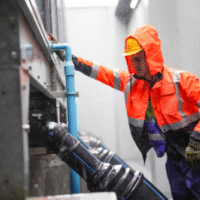
The energy industry is the backbone of the Louisiana economy, from the bustling service hubs in Houma and Lafayette to the massive land rigs operating in the Haynesville Shale. However, this vital industry is also one of the most dangerous. While many people view oilfield accidents as isolated “freak occurrences” or the result of a single worker’s mistake, the reality is often much more complex.
When an accident occurs—whether it is a pipe-handling injury on a rig near Lake Charles or a chemical exposure incident in the industrial corridor between Baton Rouge and New Orleans, the legal investigation must go beyond the immediate cause. We focus on uncovering systemic negligence, where a company’s persistent failure to prioritize safety over speed leads to disaster.
What Is Safety Culture and Why Does It Matter in a Louisiana Injury Claim?
Safety culture refers to the shared values, goals, and practices within an organization that prioritize the well-being of workers above all else, including production deadlines and profit margins. In a legal context, a “strong safety culture” means an employer has active protocols, regular training, and functional equipment to prevent harm, whereas a “weak safety culture” often points toward systemic negligence.
In Louisiana oilfield litigation, proving a poor safety culture is vital because it shifts the focus from an individual worker’s perceived error to the company’s foundational failures. For example, if a worker is injured by a vibrating tool on a jack-up rig in the Gulf of Mexico, the defense may blame the worker for not wearing gloves. However, a systemic investigation might reveal that the company hasn’t performed maintenance on those tools in years, has no vibration-monitoring program, and actively discourages workers from reporting early symptoms of Hand-Arm Vibration Syndrome (HAVS) to avoid “downtime.”
Proving these patterns requires looking into several factors:
- Management Commitment: Are supervisors present on the floor, or are they pushing for “footage” from a remote office?
- Communication: Is there a clear, non-punitive way for a floorhand or derrickman to call a “Stop Work Authority” without fear of being “run off” the job?
- Resource Allocation: Is the company investing in low-vibration tools and ergonomic assists, or are they using rusted, outdated equipment that requires excessive physical force?
How Do You Prove Systemic Negligence in an Oilfield Accident?
Proving systemic negligence involves demonstrating that an injury was the predictable result of a company’s ongoing failure to manage known risks. This is achieved by analyzing internal safety records, maintenance logs, and witness testimony to show that the employer ignored industry standards and their own safety manuals in favor of higher production speeds.
Building a case for systemic negligence in the oil industry involves a deep dive into the company’s operational history. We often look for the following “red flags”:
- Failure to Implement Task Rotation: In repetitive stress injury (RSI) cases, staying on the same high-force task for a 12-hour shift is a known hazard. A company that refuses to rotate crews is choosing to “burn out” workers’ bodies for the sake of continuous operation.
- Ignoring Job Safety Analysis (JSA) Reports: Every major task on a rig should begin with a JSA. If these documents are treated as “check-the-box” formalities rather than meaningful assessments of risk, it demonstrates a negligent culture.
- Inadequate Staffing: When a crew is short-handed, individual workers must exert twice the effort, leading to the rapid onset of lumbar disc herniation or rotator cuff tears.
- Defective or Unseaworthy Equipment: Under the Jones Act, a vessel must be “reasonably fit for its intended purpose.” A rusted valve that requires a worker to use a “cheater pipe” for leverage is a classic example of an unseaworthy condition and systemic neglect.
Common Injuries Resulting from Systemic Safety Failures
When a company ignores ergonomic risks and safety protocols, the toll on the human body is cumulative and devastating. We frequently assist workers who have spent years in the patch only to find themselves sidelined by conditions that were entirely preventable.
Spinal and Back Injuries
Decades of heavy lifting and “throwing chain” without proper mechanical assists can lead to debilitating lumbar disc herniation. In Louisiana, these injuries are often dismissed by insurance companies as “degenerative,” but we work to prove that the lack of proper lifting equipment and forced overtime accelerated this damage.
Repetitive Stress Injuries (RSIs)
Conditions like Carpal Tunnel Syndrome or Epicondylitis (Tennis Elbow) are common among those who operate vibrating machinery or perform repetitive gripping motions. A company with a strong safety culture would provide low-vibration tools and enforce rest periods; a negligent one expects workers to “power through” the numbness until they reach a point of permanent disability.
Traumatic Brain Injuries (TBI) and Shock
In the event of a sudden blowout or equipment failure, the body often enters a state of shock. As discussed in our previous insights, adrenaline can mask severe internal injuries for hours or even days. A negligent company often fails to ensure workers receive immediate medical evaluations at local facilities like Ochsner Medical Center or Our Lady of the Lake, instead pressuring them to stay on the clock to keep the “days without a lost-time accident” counter going.
Navigating the Legal Landscape: Jones Act vs. Workers’ Compensation
The path to recovery in Louisiana depends heavily on your specific job and where you were working.
- Jones Act Seamen: If you work on a “vessel in navigation”—such as a drillship or a jack-up rig—you are likely a seaman. This allows you to sue your employer for negligence and seek damages for pain and suffering, which are not available in standard workers’ comp.
- LHWCA (Longshore and Harbor Workers’ Compensation Act): This covers those working on fixed platforms or in shipyards. It is a “no-fault” system, but the benefits are often higher than state-level compensation.
- Louisiana State Workers’ Compensation: Generally applicable to land-based rigs. While it is the “sole remedy” against your employer, you may still have third-party claims against equipment manufacturers or subcontractors whose systemic failures contributed to your injury.
The “Discovery Rule” and the One-Year Clock
Louisiana has a very short “prescriptive period” (statute of limitations). Under Civil Code Article 3492, you generally have only one year from the date of the injury to file a lawsuit. In cases of cumulative trauma or repetitive stress, determining when that “year” begins can be difficult.
The “Discovery Rule” suggests the clock starts when you knew, or should have known, that your injury was work-related. However, waiting to see if a dull ache goes away is a dangerous strategy. Insurance adjusters will use any delay in treatment—even one caused by the biological masking of shock—to argue that your injury happened elsewhere, perhaps during a weekend at a camp on Lake Pontchartrain rather than on the rig.
Steps to Take If You Suspect Systemic Negligence Caused Your Injury
If you believe your injury is the result of a “production over safety” mindset at your company, you must act strategically:
- Report the Conditions, Not Just the Injury: When you file your official incident report, be specific and detailed about the circumstances that led to your injury. Mention if a critical tool was broken or malfunctioning, if the crew was severely short-staffed, or if you were denied mandatory rest or breaks which contributed to fatigue. Your focus should be on the systemic failures, not just the physical wound.
- Seek Independent Medical Care: It is crucial not to rely solely on the “company doctor,” who may have a vested interest in minimizing the severity of your injuries. Immediately visit an urgent care facility or a hospital in your community—such as St. Tammany Health System or Thibodaux Regional Health System—to obtain an unbiased and objective evaluation, diagnosis, and treatment plan.
- Document the Environment: If it is physically safe and possible for you to do so, immediately take clear, dated photos and videos of the defective equipment, the unsafe work area, and any contributing hazards. Also, keep a meticulously detailed log of your working hours, including overtime, and the specific, often rushed, tasks you were required to perform in the days leading up to the incident.
- Preserve Witness Statements: Speak to your coworkers as soon as possible after the incident. They are often the most honest and reliable source of information regarding long-standing, ignored safety issues, previous “near-misses,” or management’s history of prioritizing speed over safety. Ask them to write down what they saw and heard, including any pre-incident conversations.
Protect Your Rights After an Oilfield Injury
Systemic negligence is a silent hazard, but its consequences are loud and life-changing. If you have been injured due to a company’s failure to maintain a safe culture, you deserve more than just an insurance check that covers a fraction of your needs. You deserve a recovery that accounts for your lost earning capacity, your future medical needs, and the pain your family has endured. The Trainor Law Firm is dedicated to representing the men and women who keep Louisiana’s energy industry moving. We have the experience to challenge large insurance companies and the resources to investigate the root causes of oilfield accidents.
If you are suffering from a work-related injury, contact us today at 985-545-3422 or visit our website to schedule a confidential consultation. Let us help you hold negligent companies accountable and secure the future you have worked so hard to build.